
Global ERP environments are under increasing pressure. Regulatory requirements continue to evolve, compliance processes are moving to digital channels, and authorities expect structured electronic reporting delivered in prescribed formats and on local timelines. At the same time, IT teams are responsible for keeping ERP platforms current, reducing custom code, and supporting expansion into new markets without increasing operational complexity.
Dynamics 365 ERP applications are built to support these needs through comprehensive localization capabilities and extensible, upgrade-safe tools. As part of our ongoing investment, we are introducing localization for Türkiye. This addition expands Microsoft’s out-of-the-box localization coverage to 58 countries and regions, helping organizations address local regulatory requirements while maintaining a consistent, standardized ERP platform.
A modern foundation for localization: Globalization Studio
Globalization Studio is the extensibility framework in Dynamics 365 ERP apps for configuring and extending localization-related functionality without extensive custom development. It provides a consistent set of tools and services to support financial, tax, and regulatory processes while maintaining application upgradeability.
Key capabilities of Globalization Studio include:
- Electronic Reporting (ER) for defining regulatory reports and electronic documents using configurable formats.
- No-code and low-code extensibility to adapt formats, business rules, and calculations without modifying core application code.
- Centralized management of localization functionality aligned with Microsoft-delivered country and regional solutions.
- Support for regulatory changes, enabling updates to be applied as requirements evolve.
This approach allows organizations to manage localization at the legal entity level while maintaining a common application foundation across regions. It also provides partners with a consistent framework for delivering additional localized functionality.
Introducing Türkiye localization in Dynamics 365 ERP
With the 2025 Release Wave 2, Dynamics 365 ERP introduces built-in localization for Türkiye. This release expands Microsoft’s country and regional coverage and provides a supported starting point for organizations operating in the Turkish market.
The Türkiye localization is built using Microsoft Globalization Studio tools and services and works across Dynamics 365 ERP applications. It follows Microsoft localization patterns and is designed to support updates as local regulatory requirements evolve.
Considerations for IT and partner teams
For organizations operating in Türkiye, or planning future expansion, this localization can reduce the need for custom-built solutions or separate localization add-ons. From an IT perspective, this can support:
- Faster configuration using Microsoft-delivered localization functionality.
- Reduced reliance on custom code that can complicate maintenance and upgrades.
- Use of extensible tools to adapt localization as regulatory requirements change.
- Alignment with localization approaches used across other Dynamics 365 ERP countries and regions.
For partners, built-in localization provides a solid foundation for focusing on industry-specific or customer-specific requirements, rather than developing baseline regulatory functionality.
Türkiye localization highlights
The Türkiye localization includes capabilities designed to address common regulatory and operational scenarios, including:
- Import of currency exchange rates from the Central Bank of the Republic of Türkiye.
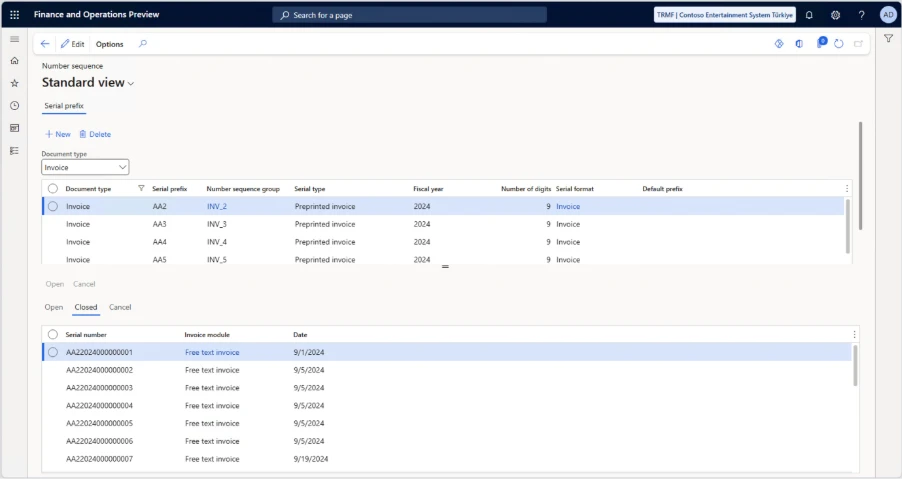
- Continuous serial numbering for packing slips and invoices.
- Currency conversion in purchase and sales orders.
- Exchange rate difference invoices.
- Generation of electronic packing slips and invoices.
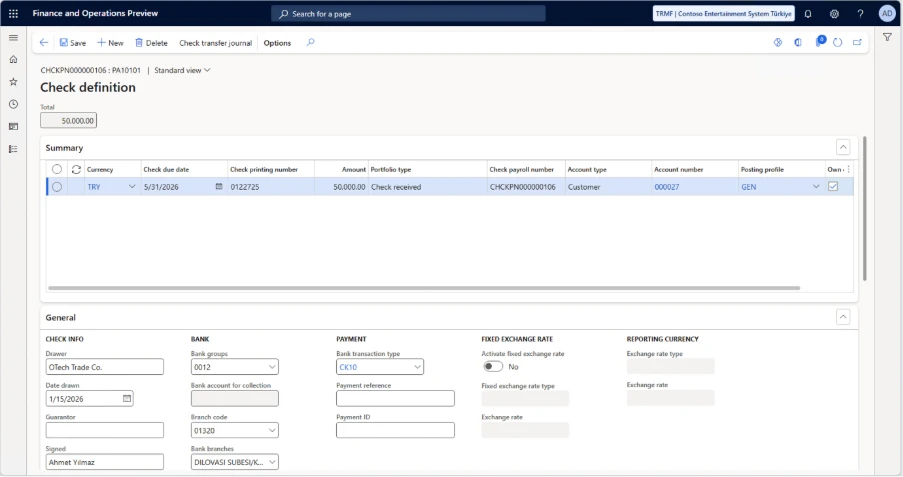
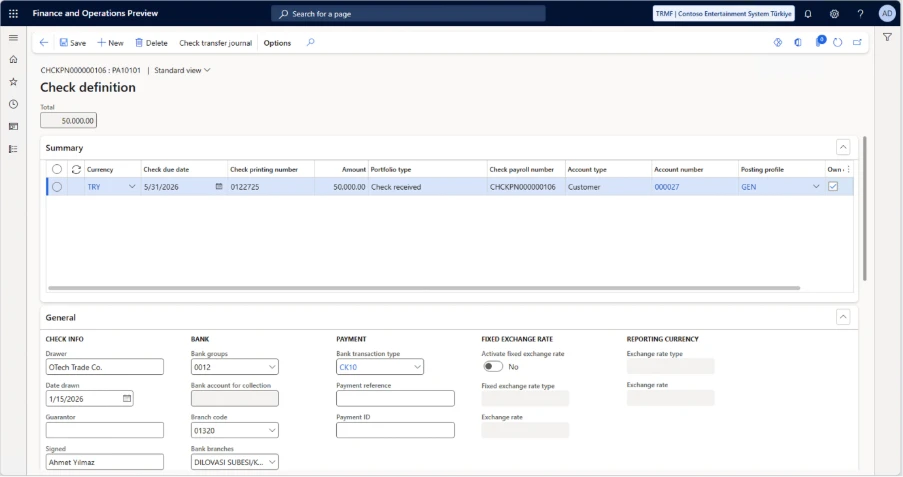
- Enhancements for cheque and promissory note processing.
- Prorated depreciation and allocation of final-year depreciation across months for fixed assets.
- E-Ledger generation in XBRL (eXtensible Business Reporting Language) format.
These capabilities are designed to help organizations meet local reporting and operational requirements when using Dynamics 365 ERP apps in Türkiye.
Getting started with Türkiye localization
Localization functionality in Dynamics 365 ERP apps operates at the legal entity level. To enable Türkiye localization:
- Set Türkiye as the primary address for the relevant legal entity.
- In Feature management, enable the Globalization expansion – Türkiye feature.
Once enabled, Türkiye-specific fields and user interface elements become available within the legal entity. For example, you can configure serial prefixes and enable continuous serial numbering of various documents, such as sales invoices or product receipts for purchase return orders.
You can also complete the monthly closing process by creating an e-Ledger journal and exporting an e-Ledger file in XBRL (eXtensible Business Reporting Language) format. Using the Globalization Studio’s Electronic Reporting tool, you can easily extend the format to meet your integrator’s requirements.

Designed for global scale with local flexibility
With this release, Dynamics 365 ERP apps continue to expand Microsoft’s localization footprint while maintaining a consistent approach to extensibility and upgradeability. Equipped with Globalization Studio tools, organizations can support operations across multiple countries and regions while addressing local requirements within a unified ERP platform.